


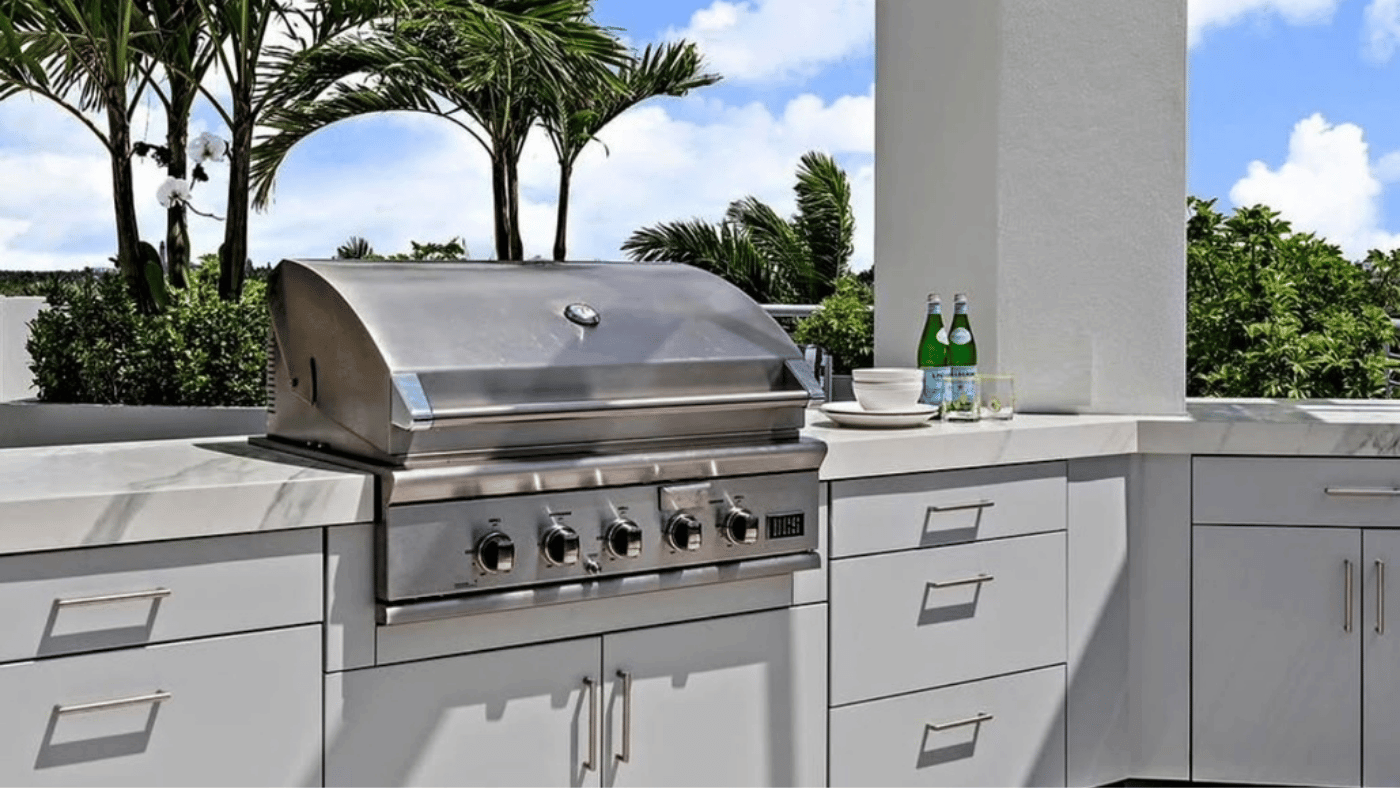
All-Weather or Marine-Grade Outdoor Kitchens: What’s the Difference?

Table of Contents
- The Outdoor Kitchen and Furniture Industry have been getting it wrong all these years
- Define the terms in using All-Weather or Marine-Grade Outdoor Kitchens
- All-Weather or Marine-Grade Outdoor Kitchens: The Simple Explanation
- Does Marine-Grade Automatically Mean Maintenance-Free?
- Why Coastal Outdoor Kitchens Require More Thought
- All-Weather or Marine-Grade Outdoor Kitchens: Do Not Skimp on the Appliances.
- FAQs
When shopping for an outdoor kitchen, you will see terms such as all-weather or marine-grade outdoor kitchens. You will even find "outdoor-rated" or “weather-resistant” They may sound interchangeable, but they are not. They are often stated incorrectly in order to add confusion regarding quality of the different products.
This distinction becomes especially important when your outdoor kitchen will be installed near the coast, where salt air, moisture, humidity, intense sun and changing weather can be particularly demanding on cabinetry, hardware and appliances. Salt air, humidity, strong wind and brutal sun can be brutal on outdoor kitchens,
At Riviera Outdoor Décor, we believe the question shouldn't simply be, “Can this go outdoors and last?”
A better question is:
“What is it made of, and is it designed for the environment where I live?”
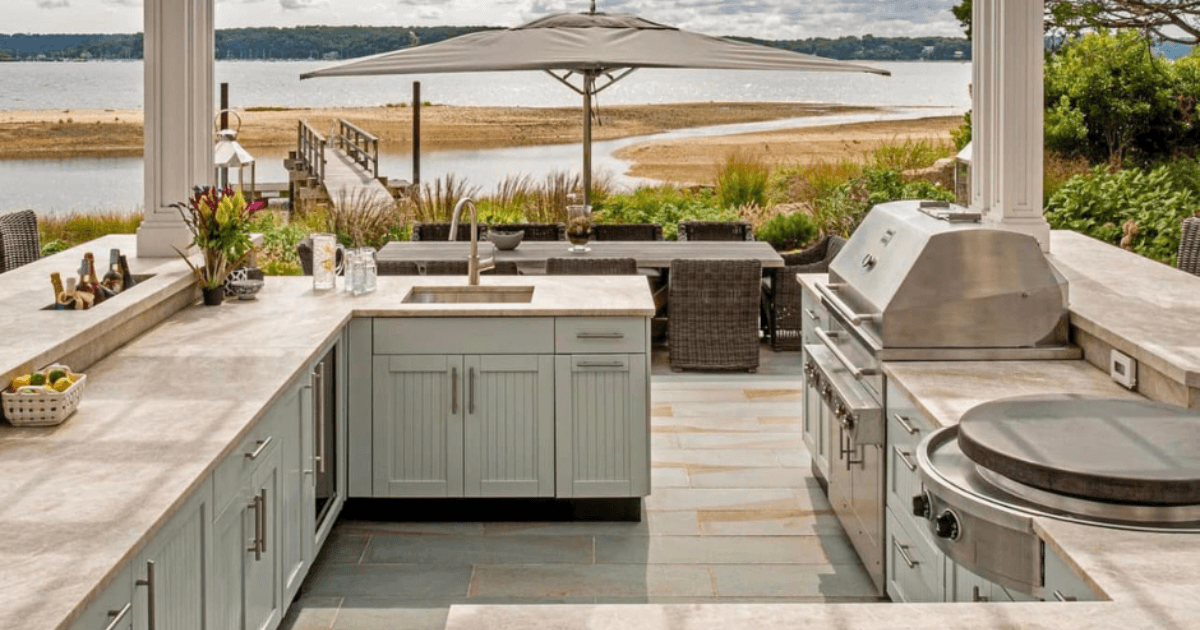 All-Weather or Marine-Grade Outdoor Kitchens, which type is best suited to last in this climate?
The Outdoor Kitchen and Furniture Industry have been getting it wrong all these years
Let’s get real about outdoor kitchen and furniture showrooms. They have been doing it wrong all these years and no-one has questioned the process- until now.
In a climate-controlled showroom, the cabinets gleam, the cushions are spotless and everything looks beautiful. But one important thing is missing: the outdoors.
A polished display shows you style—not how a product handles sun, salt air, humidity, wind and rain. It does not answer the question, "how will this product look outside 15-30 years later?
The question is not a simple All-Weather or Marine-Grade Outdoor Kitchens before you invest. The question you need to ask is... How long has it been tested outdoors, and under what conditions? This will answer the question if you want all-weather or marine-grade. What maintenance does it require? Does the person helping you have the training and firsthand experience to explain how the materials, finishes and hardware hold up?
If you’re hoping for 10, 20 or even 30 years of enjoyment, you deserve realistic expectations—not just a sales promise.
At Riviera Outdoor Décor, outdoor living belongs outdoors—and so does our showroom. We field-test our products in real coastal conditions so you can see firsthand how they’re performing. We share what we’ve learned, explain proper maintenance and are honest about what we’re still evaluating.
Anybody can show you something beautiful when it's new. Riviera wants to show you what happens after it lives outside.
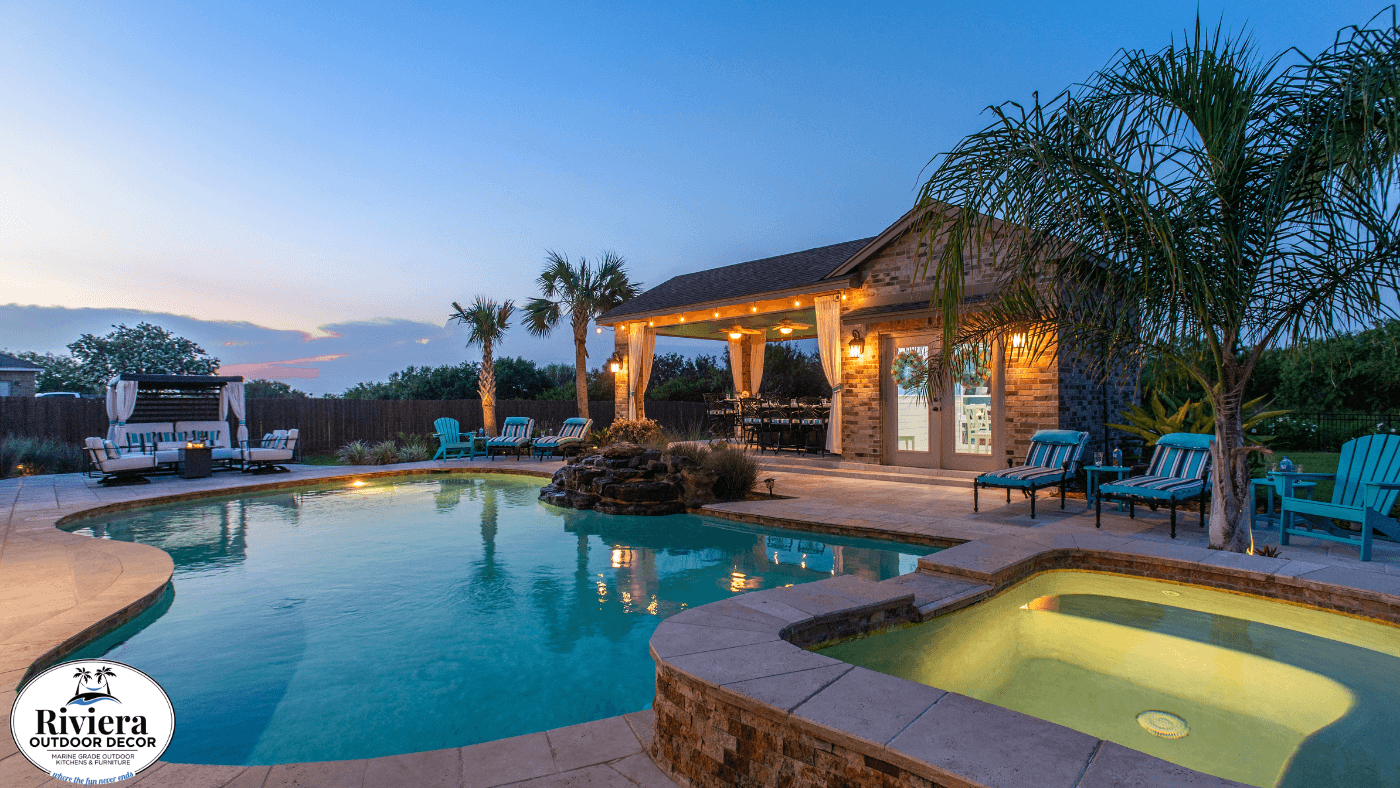 A partial picture of the half acre, award-winning outdoor showroom of Riviera Outdoor Décor where we Field Test the products we sell. Located near coastal salt waters and salt water pool.
Define the terms in using All-Weather or Marine-Grade Outdoor Kitchens
What Does “All-Weather” Mean?
All-weather generally describes a product designed for outdoor use and exposure to common weather conditions.
Depending on the product and manufacturer, that may include a small resistance factor to:
Rain and moisture
Sun and UV exposure
Heat
Humidity
Temperature fluctuations
Everyday outdoor conditions
That's important. An indoor cabinet obviously isn't appropriate for an uncovered outdoor kitchen.
But there's a limitation to the term all-weather: it doesn't necessarily identify the material used to build the product or tell you how that material will perform in a highly corrosive environment.
An outdoor kitchen can therefore be considered suitable for outdoor use without necessarily being the best choice for a home exposed to salt air and coastal conditions.
What Does “Marine-Grade” Mean?
Marine-grade takes the conversation a step further.
Rather than simply asking whether something can be used outdoors, marine-grade focuses on materials and construction selected for more demanding environments—particularly environments where moisture, salt and corrosion are concerns.
A good example is stainless steel.
There are many grades of stainless steel, and they don't all provide the same level of corrosion resistance.
316 stainless steel, commonly referred to as marine-grade stainless steel, contains molybdenum, which improves its resistance to chloride-related corrosion and pitting compared with commonly used 304 stainless steel.
That distinction becomes particularly valuable around:
Coastal homes
Beach houses
Saltwater pools
High-humidity environments
Outdoor kitchens exposed to salt-laden air
This is why simply seeing the words “stainless steel” on an outdoor appliance doesn't tell the entire story. Ask which grade of Stainless Steel?
If marine-grade materials in ships at sea can withstand years on the open water—facing relentless salt air, blazing sun, moisture, and harsh sea conditions—imagine how well they can perform in your backyard.
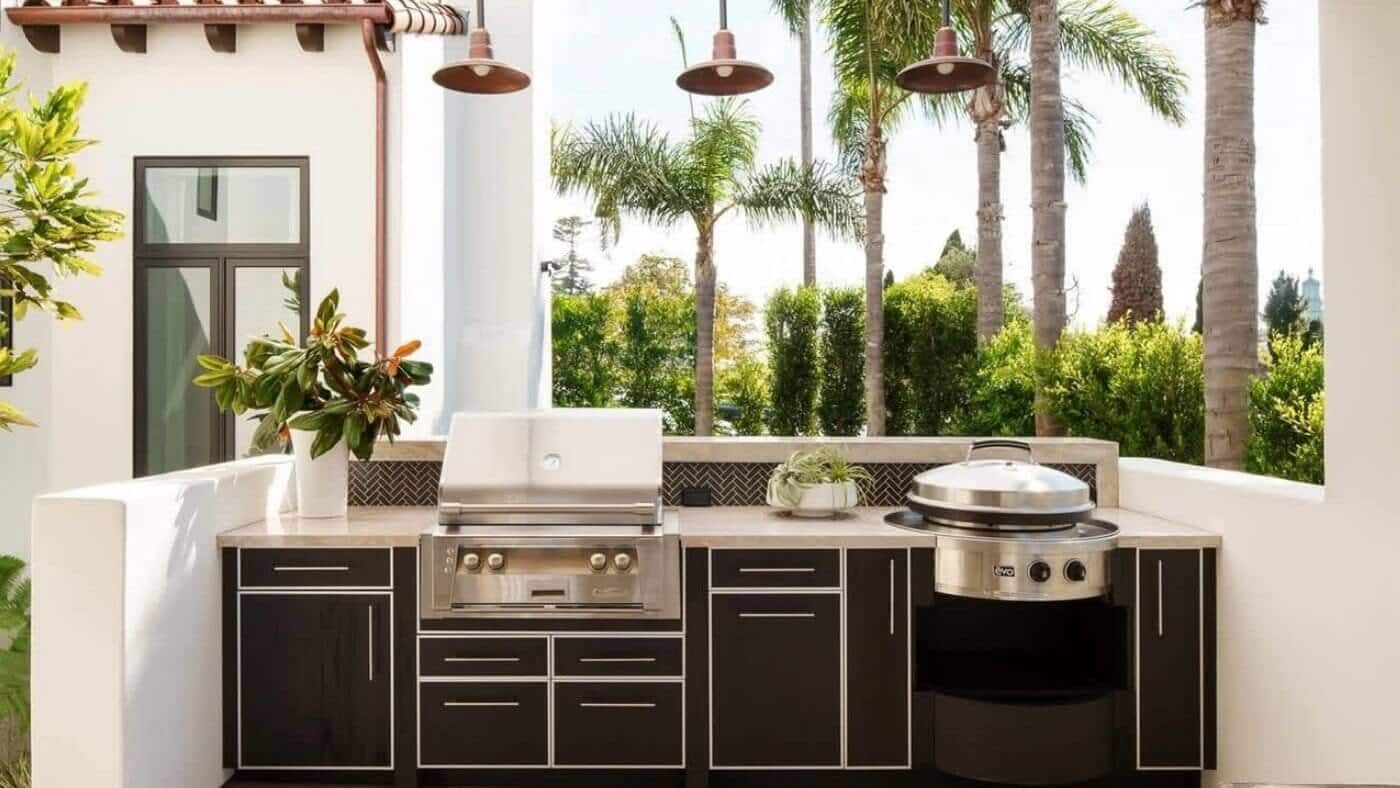 All-Weather or Marine-Grade Outdoor Kitchens. Only a supplier of Marine Grade Stainless Steel will give you a life time warranty for a coastal outdoor kitchen.
All-Weather or Marine-Grade Outdoor Kitchens: The Simple Explanation
Here's one of the easiest ways to understand the difference:
All-weather tells you where it can live. Marine-grade tells you what it's built to withstand.
An all-weather product is designed for outdoor conditions.
A marine-grade product goes further by using materials selected to perform in environments where corrosion, salt and moisture can present additional challenges.
For a homeowner hundreds of miles from the coast, an appropriately constructed all-weather kitchen may be an excellent solution.
For someone building an outdoor kitchen overlooking the Gulf, Atlantic, Pacific, Caribbean or another saltwater environment, material selection becomes considerably more important.
Riviera Outdoor Décor carries the largest selection of Marine Grade Outdoor Kitchens ranging from the finest in luxury to the budget friendly.
Does Marine-Grade Automatically Mean Maintenance-Free?
No—and this is an important distinction.
Marine-grade does not mean maintenance-free, rust-proof under every circumstance, or indestructible.
Salt, dirt, chemicals and environmental contaminants can accumulate on outdoor surfaces. Even premium materials benefit from appropriate cleaning, inspection and maintenance.
Marine-grade should therefore be viewed as better material selection for demanding environments, not permission to neglect the kitchen.
At Riviera Outdoor Décor, we encourage coastal homeowners to think about the entire system rather than one material or marketing label. This includes the cabinetry, appliances, hardware, fasteners, countertops, ventilation, refrigeration and other components.
Why Coastal Outdoor Kitchens Require More Thought
Imagine two identical-looking outdoor kitchens.
One is installed inland under a covered patio.
The other sits at a beach house where it is regularly exposed to salt-laden air, high humidity, wind and moisture.
They may look identical on installation day.
The environment will help determine how they look and perform years later.
That's why Riviera Outdoor Décor approaches coastal outdoor living differently. We believe material selection should happen before colors, appliances and accessories are finalized.
A beautiful outdoor kitchen is only truly successful when the construction underneath that beauty is appropriate for where it will live.
All-Weather or Marine-Grade Outdoor Kitchens: Do Not Skimp on the Appliances.
Homeowners often spend considerable time researching their cabinets and then install standard outdoor appliances into them.
For coastal projects, investigate the materials used in:
Grills. Refrigerators. Sinks. Faucets. Ice makers. Beverage centers. Vent hoods. Hardware. Fasteners. You do not want to be replacing your outdoor kitchen appliances frequently due to the corrosive nature of salt air caused by either coastal conditions or a salt water pool. Outdoor kitchen appliances specifically constructed for coastal conditions go well beyond the minimal requirement of 316 Stainless Steel.
Pay close attention specifically to you outdoor refrigeration. Marine grade seriously matters for food safety. Yes, you will spend more but your food and beverages will stay within the correct temperature range. You will also find the longest warranty in the industry for outdoor refrigeration- six years.
Outdoor Coffee and Beverage Bar- keep it Marine Grade
If you're creating an outdoor coffee and beverage bar, the same principle applies to the refrigeration, tap system and other components.
The goal is not merely to build an attractive outdoor kitchen. The goal is to create an entire outdoor system designed for its environment.
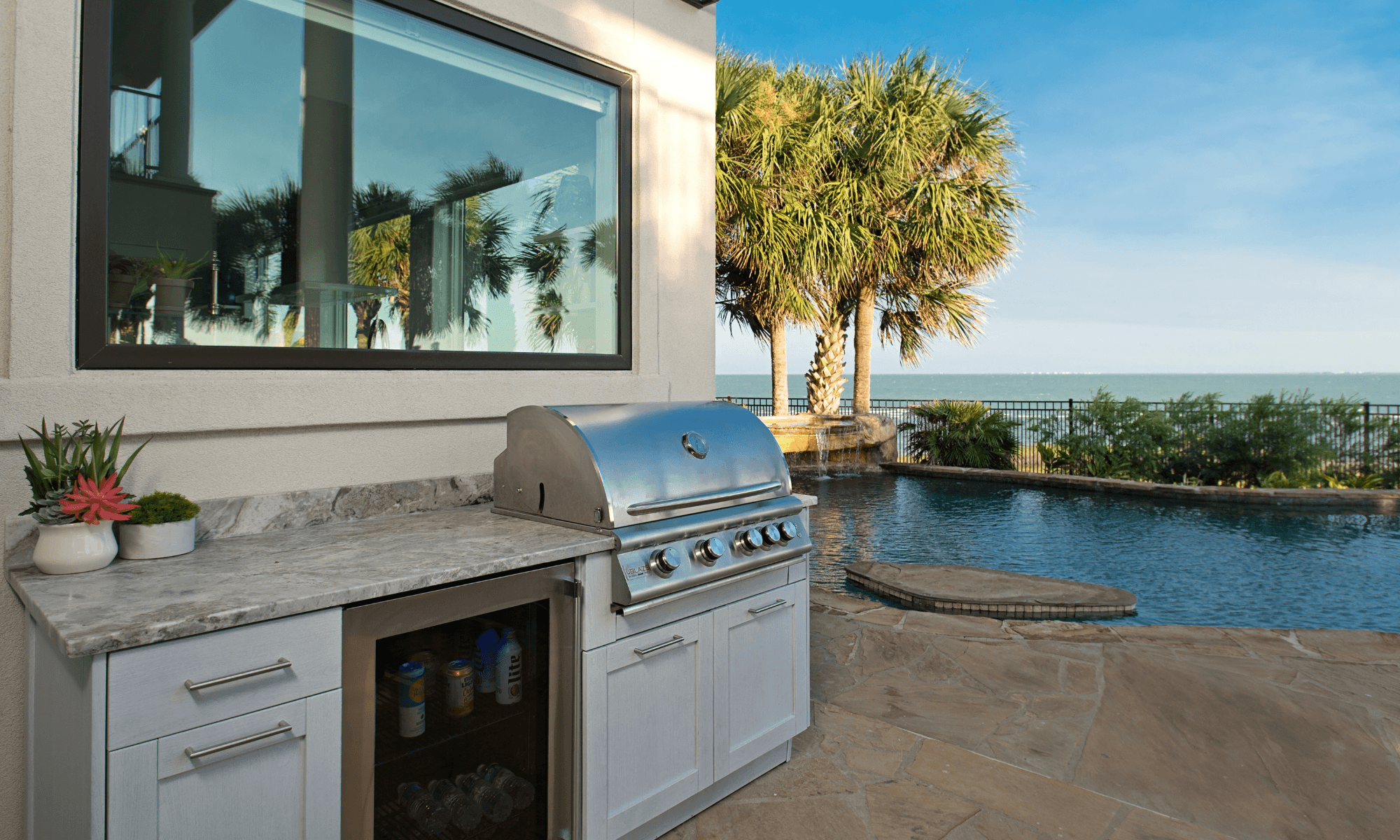 All-Weather or Marine-Grade Outdoor Kitchens are substantially different when it comes to quality and longevity. Marine Grade Outdoor Kitchen Appliances are not only 316 Stainless Steel , however, the wires are coated to protect against salt water corrosion.
Marine-Grade + All-Weather
You receive the convenience of a kitchen designed for outdoor living with materials and components selected for the additional demands of coastal environments.
And that becomes increasingly important as the outdoor kitchen grows beyond the grill.
Today's outdoor kitchen can include a coffee bar for sunrise, cold drinks by the pool, a grill for lunch or dinner, a wine and beer bar for entertaining, outdoor dining and an evening fire lounge.
When you're designing a space you'll potentially use from the first cup of coffee until the last glass of wine, longevity matters.
Questions to Ask in Considering an All-Weather or Marine-Grade Outdoor Kitchens
Don't stop at: “Is it outdoor-rated?” Rather, you should ask ask:
What material are the cabinets made from?
What grade of stainless steel is being used?
What are the hinges, handles and fasteners made from?
How are the cabinets finished?
Are the appliances appropriate for my environment?
How will salt air affect the materials?
What maintenance is recommended?
What warranties apply?
And perhaps most importantly:
“Would you recommend this exact kitchen for my home's location and exposure?”
The answer may tell you much more than an “all-weather” label ever could.
Summary- All-Weather or Marine-Grade Outdoor Kitchens
As previously mentioned...
Here's one of the easiest ways to understand the difference:
All-weather tells you where it can live. Marine-grade tells you what it's built to withstand.
All Weather is a description of the product. It does not specify what was used in producing the product.
Marine Grade is defined and specific materials and construction of a product.
Marine-grade means more than surviving the elements. It means being tough enough to withstand demanding coastal conditions like salt air, humidity, wind and intense sun.
If a material can perform for years aboard a vessel exposed to open water and salt spray, it is built to handle your backyard.
At Riviera Outdoor Décor, through our field testing, we have found marine grade products to be superior in longevity especially in use around salt water pools. We offer three types of marine-grade outdoor kitchens because no single material is right for every project. One may offer greater tensile strength, another greater compressive strength. One may better fit your design style, budget or countertop selection.
That is why working with a trained outdoor kitchen designer matters. The right designer considers your environment, materials, cooking needs, design goals and budget to help you choose the marine-grade solution best suited for your space.
Marine-grade is not just about how it looks today. It is about how well it performs for years to come.
FAQs
What is the difference between an all-weather and a marine-grade outdoor kitchen?
All-weather generally means a product is designed for normal outdoor exposure such as rain, sun, heat and humidity. Marine-grade goes further, using materials and construction selected for more demanding environments where salt, moisture and corrosion are major concerns.
Do I need a marine-grade outdoor kitchen if I live near the coast?
If your outdoor kitchen will be exposed to salt air, high humidity, strong winds or a saltwater environment, marine-grade materials should be strongly considered. Coastal conditions can be significantly more demanding on cabinetry, hardware and appliances.
Does “outdoor-rated” mean the same thing as “marine-grade”?
No. Outdoor-rated tells you that a product is intended for outdoor use. It does not necessarily tell you what materials were used or how those materials will perform in a corrosive coastal environment.
Is all stainless steel marine-grade?
No. There are different grades of stainless steel. For example, 316 stainless steel contains molybdenum, which gives it greater resistance to chloride-related corrosion and pitting than commonly used 304 stainless steel.
Is 316 stainless steel the only marine-grade outdoor kitchen material?
No. Marine-grade outdoor kitchens can be constructed from different materials, each offering different advantages. Riviera Outdoor Décor offers three types of marine-grade outdoor kitchens because the right choice depends on the environment, design, countertop, budget and performance requirements.
Which marine-grade outdoor kitchen material is best?
There is no single best material for every project. One material may provide greater tensile strength, another may offer greater compressive strength, while another may better fit your design aesthetic, countertop selection or budget.
Do my outdoor kitchen appliances need to be marine-grade too?
For coastal projects, the entire outdoor kitchen system matters—not just the cabinets. Grills, refrigerators, sinks, faucets, ice makers, beverage centers, vent hoods, hardware and fasteners should all be selected with the environment in mind.
Why is outdoor refrigeration especially important in coastal kitchens?
Outdoor refrigeration must maintain proper food-safe temperatures while operating in demanding outdoor conditions. Coastal homeowners should also consider corrosion protection, construction materials and warranty coverage when choosing refrigeration.
Should I have a marine-grade outdoor kitchen around a saltwater pool?
Yes. Saltwater pools can create many of the same corrosion concerns found in coastal environments, making material selection especially important for cabinetry, appliances and hardware.
Why does field testing matter when choosing an outdoor kitchen?
A climate-controlled showroom can show you how a kitchen looks when it is new. Field testing shows how products actually perform when exposed to sun, salt air, humidity, wind, rain and changing temperatures over time 10, 20 or 30 years down the road. At Riviera Outdoor Décor, we field test and show to all our clients what their outdoor kitchen cabinets and appliances will look like years after purchase.
How long should an outdoor kitchen last?
There is no single lifespan for every outdoor kitchen. Longevity depends heavily on materials, construction, exposure, maintenance and the environment where it is installed. That is why asking how and where a product has been tested can be more valuable than simply asking whether it is “outdoor-rated.”